Showing posts with label Star Wars canon. Show all posts

20 December 2017

Star Wars: State of the Union, Pt. 2


In case there was any mystery about it (but probably not), I've loved everything Star Wars since before my age reached double digits.  I grew up with the Original Trilogy, and then the first round of Special Edition releases on VHS -- the ones with those 30+ minute George Lucas documentaries that were, for some self-egrandizing reason, placed BEFORE the feature film.  I've faithfully followed EU content since I found Michael Stackpole's The Bacta War (the fourth X-Wing novel) in 1997 while walking through a random book store with my dad, and my mind was completely blown that there were MORE STAR WARS STORIES than just what was on film.  I suffered through the prequels when they were released with some enormous internal love/hate conflict, because a) MORE STAR WARS STORIES, but because b) bad acting and poor retconning.  And the same could be said of my current predicament with Episodes VII and VIII: a) MORE STAR WARS STORIES, but b) not at all what I'd dared to hope for.

Those of us who come from decades of EU fandom are probably at a huge disadvantage compared to those who are new fans, or those who never delved into that treasury.  Viewing these new movies with a more or less blank slate for post-ROTJ material is definitely a leg-up toward appreciating the new direction of the franchise.  And even with my scruples, there's lots of stuff to like about these new movies.  Granted, I had a lot less to complain about with The Force Awakens than I have with The Last Jedi, but for the most part, I've ridden the wave of excitement surrounding all of the new and upcoming Star Wars films.

Why?  Because I've loved everything Star Wars since before my age reached double digits.

That said, what I forgot is that -- in this day and age -- you're not allowed to hold a critical opinion or you're automatically intolerant and shortsighted (even if you love the very thing you criticize).  And you're especially not allowed to be critical of anything touting itself as progressive, and TLJ makes no bones about its attempt to radically challenge the established "rules" and tropes of a 40-year-old franchise.  I'm exceptionally critical of TLJ because I think it was radical simply for the sake of being radical (my thoughts on the movie itself here).  But I'm also exceptionally critical because I've loved everything Star Wars since before my age reached double digits, and when you love something, you truly want it to be the best it can possibly be.  Unfortunately, the modern mindset can't comprehend how you can possibly say anything negative about anything deemed to be progress.

In that regard, this followup post really isn't about Star Wars movies.  It's about Star Wars fandom.  And I wouldn't feel the need to bring up the issue, except that media everywhere and even voices from within the franchise itself have backlashed against the backlash against TLJ (did you follow that sentence?).  Fandom itself has been on trial in the weeks following the release of TLJ, because people no longer know how to disagree about things without drawing battle lines -- not even when it pertains to space operas about space wizards and laser swords.  Joanna Robinson put it best in this great Vanity Fair article about the same topic: "We are, these days, a culture of extremes."  Therefore, it's become virtually impossible for any kind of disagreement to be cordial.  That's why articles upon articles are being published, and even the Alt-Right has been brought into the conversation about maliciously impacting reviews.  A strong variety of passive aggressive memes are right now being rampantly shared by official pages and fans alike, criticizing the fanbase for claiming The Force Awakens was too much like the original trilogy, and then claiming The Last Jedi wasn't like them enough.  In other words, casting the filmmakers and writers as victims: "They've done what you wanted, what more do you want?"

There will never be a perfect conclusion to this trilogy.  I don't say that because I'm a crotchety EU fanboy, but because there is realistically no way any filmmaker can touch any kind of original material by addding onto it or changing it in some way, and not expect somebody somewhere to have contrary opinions.  Not with the amount of time that has passed between the release of ROTJ and today, a time period in which so many stories and theories and ideas have become entrenched, and not everyone is capable of letting their imagination go so easily.

And to retreat to my intial point, that SHOULD be okay.  We should all be allowed to have our own opinions and disagree on which movie is the best in the Star Wars universe without being cast as ungrateful children.  I'm not sure why the fanbase (or subsets of the fanbase) should be labeled fickle for disliking the direction a particular franchise film went, especially when -- by virtue of writing more stories -- you are narrowing the scope of the myth and the mystery surrounding a story by locking it into a defined narrative with defined events and defined results.  If you write the followup story, you inveitably take away theories and possibilities and cast the older material in new light.  That is inevitably going to irritate some people who feel as though well enough should have been left alone, while simultaneously catapulting other people with fewer preconceived notions into new heights of imagination.  The novels did the same thing back in 1978 when Alan Dean Foster's Splinter in the Mind's Eye first hit the shelves; Lucas' prequel trilogy did it again with The Phantom Menace in 1999; the Disney franchise is treading the same lonely paths of mixed reviews with The Force Awakens and The Last Jedi.

When you love something, you want it to be the best it can be.  As someone who's loved everything Star Wars since before his age reached double digits, and as someone who enjoyed TFA but particularly disliked TLJ (maybe -- maybe -- almost as much as Attack of the Clones), I've also REALLY enjoyed discussing the particulars of this movie with both my friends who share my opinion and also those who completely disagreed with me.  It's helped me to see things in a different light, to better articulate my qualms with the new brand of storytelling, and to talk about space wizards and laser swords with people who care as much about them as I do, albeit from different perspectives.

In sum, I'm not sure why the filmmakers and critics and media reps are so offended and disheartened that some fans strongly dislike their movie and not everyone is head-over-heels for it.  I mean, there is that one idiot who started a petition to have The Last Jedi removed from the canon, so maybe it's all his fault?  Furthermore, I really wish people who all love Star Wars could stop drawing lines in the sand of what constitutes "true fandom" and together embrace the pros and cons of the imperfect art that is storytelling.  No franchise is flawless, and that's the beauty and integrity of what makes even space operas about wizards and laser swords ultimately about humanity.

Maybe The Last Jedi isn't the story I wanted, but it is the story I got.  Perhaps Episode IX will collectively bring TFA and TLJ into a much stronger, much more cohesive focus.  We won't know until we get there.  And since I've loved everything Star Wars since before my age reached double digits, and because I want Star Wars to be the very best it can be...  I'll wait with eager expectation.

15 December 2017

Star Wars: State of the Union


I didn't blog about Rogue One when it finally came out (although I did beforehand).  In my opinion, that's probably still the best new Star Wars movie to be released, although I certainly didn't love it.  However, I've come to grips with where the franchise has gone, and while I've still been underwhelmed by the majority of the new content and direction, I just love Star Wars too much to stay away.

It should go without saying that there will be spoilers ahead, although I'll attempt to be as tactfully vague as possible.  But seriously, if you're reading blogs about Star Wars so close to a movie premier without first seening it, I'm not really sure you have the right to be upset with anyone but yourself if anything is given away.

I'll start with things I liked about The Last Jedi, because I don't want to be a crotchety "old-Star-Wars-was-better, long-live-the-EU" patriot just for the sake of hating everything new.

Likes

A-Wings.  I like the A-Wings.  Finally, a decent -- if brief -- utilization of one of the coolest ships in the Star Wars universe.  The Rogue Squadron and X-Wing simulators were some of my favorite games growing up, and the A-Wing was always a favorite of mine to fly.  Of course, in its original concept, the A-Wing was primarily a lightly armed reconnaisance snubfighter, fast enough to go head-to-head with the Empire's TIE Interceptor but not really intended for dogfighting, so I suppose the tricky spot the Resistance finds itself in necessitates scrambling every available fighter for action...  I'll take what I can get.

Last Jedi features some pretty cool Force techniques and effects.  And blessedly, there is still no mention of Midichlorians anywhere in the new triliogy.  I also appreciate Last Jedi's near direct citations of the Force according to Ben Kenobi, and the fact that it is described as its own entity, existing in the spaces between everything.

There's also a pretty cool lightsaber sequence with good choreography, believable pace, and symbolic parallelism that I really enjoyed.  I won't say more.  You know what I'm talking about.

This film takes a cue from George R. R. Martin and makes the bold decision to kill characters willy nilly.  I like a story in which heroes and villians aren't untouchable and the audience can get a sense of their mortality.  Unfortunately, I don't care enough about any of these characters to be more than passingly phased when each meets an untimely demise.  Well, except for Admiral Ackbar, but Force Awakens and Last Jedi both so poorly utilized him that the scriptwriters felt it necessary to literally tell the audience that he'd died so they'd actually notice he was gone.

Lastly, I love Mark Hamill.  I've got plenty of stuff I don't like about Luke Skywalker in this film, but Mark Hamill's portrayal of this iteration was great.  He plays the role of reluctant mentor well, and delivers some of the movie's greatest lines.  And frankly, it was just fanstastic to see Mark Hamill again wielding a lighstaber.

Dislikes

All of the bad guys in this trilogy are weak sauce -- maybe cool at a concept level, but flat in delivery.  In particular, Snoke's character is a missed opportunity for a cool, mysterious villian, with a too-soon reveal, a stupid name, and stereotypical bad-guy shortsightedness.  In turn, Kylo Ren is a child with powerful toys, surrounded by laughably ineffecient and unbelivable pawns.  At least the grunts Vader choked out in the OT were militaristic, disciplined, and appropriately professional.  In sum, there is no Vader or Palpatine equivalent to truly make this a saga of good versus evil, or even a conflict to really care about, and portrayal of The First Order is a joke compared to that of The Empire.

Rey's resistance to Kylo Ren's call to the dark side is a foregone conclusion.  I mean, obviously.  The good guys always win.  But at least cause me to suspend my disbelief a little.  At no point during the course of Last Jedi is there any real danger of Rey going to the dark side -- no legitimate temptation, no personal weaknesses.  While she's the only character in this new Star Wars saga that I can really find any interesting qualities in, she's also a huge Mary Sue, because she makes all the right decisions all the time without failing.  While I'm not entirely convinced we've been told her true parentage, I do appreciate the fact that the writers didn't (yet) shoehorn her into some OT genealogy, although their solution still somehow feels like a bit of a cop-out after all the anticipation surrounding the movie.  I imagine the writers standing around literal drawing boards with furious ink splotches all over their faces, holding the following conversation: "Skywalker's out because that's too obvious."  "Solos are out because seriously how is that even possible without them knowing?"  "Kenobi's reaching."  "Fett's just fan service."  "She's got Qui Gon Jinn's hairstyle, is that enough?"  "No, that's all stupid.  Let's just play it safe instead."

Moving on.

Let's face it.  Star Wars without Harrison Ford attempts to do humor and ultimately falls short.  Sure, I chuckled at a handful of slapstick things in this movie, but there is no more purely Star-Wars-brand humor than Han Solo snarkiness juxtaposed with C-3P0's matter-of-factedness (who, by the way, was essentially a non-character in this film).  Goofy Finn moments don't cut it any more than goofy prequel droids.  Even OT Star Wars didn't shine when it tried on the Three Stooges act either (see: R2-D2 swallowed and spit out by a swamp monster; Ewok shenanigans; weird Special Edition edits to the Max Rebo band in Return of the Jedi).

There are only so many times a montage of weird background space aliens works for me.  The prequels are notorious for their meaningless backdrops full of tentacled and strangely-dressed characters who only serve as texture.  We get it.  We're in space.  There are aliens.  You don't have to convince us anymore.  Rogue One actually did this element well with Jedha City, and Maz's cantina in The Force Awakens likewise felt like it belonged because it was intentionally mirroring the Mos Eisley cantina in order to establish new Star Wars lore.  But Last Jedi's take on Jabba's palace meets Casino Royale was forced at best, and ultimately detracted from the rest of the story that was transpiring.

I believe strongly in the "If you show the gun, you must use the gun" rule of writing -- otherwise, it's just lazy writing or lackluster fan-service.  Luke's submerged T-65 X-Wing submerged was the thing in Last Jedi that truly got me excited, but it ultimately wasn't anything more than a symbolic set piece -- merely indicative of his abandonment of the Force and his history, and showing how he got to the island in the first place.  There is nothing I would have loved more than to see Luke Skywalker use the Force to lift that classic X-Wing out of the water -- symbolizing a rebirth of his character, a "character flaw" of always coming to rescue his friends, and a new resolve to right past wrongs.  He should have gotten into that X-Wing cockpit like he does in every single other Star Wars movie featuring Luke Skywalker the pilot.  But because this new franchise is about Rey, and apparently only Poe is allowed to fly X-Wings and live in this saga, that simply couldn't happen.

In that regard, I dislike everything about this interpretation of Luke Skywalker's character (with the noteworthy exception of his incredible display of power at the conclusion).  Hermit in exile?  Sure.  Crotchety and a little crazy like both of his deceased mentors?  Okay.  But fearful?  Callous and uncaring?  No reaction to Han's death or seeing Chewie again for the first time in decades?  This is not the same Luke Skywalker who faced Darth Vader in ROTJ and redeemed him, whose belief in the Force motivated him to again and again face impossible odds and forsake his own training to rescue his friends, and who was so in touch with the Force that he was able to commune with the spirits of his mentors.  It's even harder to accept this weak characterization coming from the EU as I do, where "Master Skywalker" is a title associated with a New Jedi Order and long-term heroism and fidelity.  I get that he's hardened by his failure with Kylo Ren.  And admittedly, this version of Luke could be so much more believable if I was sold on his post-ROTJ activities in the new canon, but so much lackluster backstory doesn't make Luke a tortured, tragic figure brooding on an isolated, Dagobah-esque island.  It just makes him disappointing.

Lastly, my biggest complaint is the contrived plot in this film.  Kasden & Kershner's script for The Empire Strikes Back did a fantastic job of making an extended chase sequence gripping and believable for the course of 124 minutes.  Last Jedi attempts to emulate this, essentially taking the big plot points of Empire and mashing them with loose ideas from heist and action movies, and then regurgitating them into a sequence of events that play loosely with believable time lapse and ultimately drop flat or unrecognizable characters into a current of events, in which their decisions don't matter because the plot marches forward without any connection to their choices.

Conclusions

Bear in mind that I'm rating this movie on a couple of scales.  My overall description of The Last Jedi as a standalone film devoid of context is "fun."  It's entertaining, familiar, well-acted and well-produced.  As the followup to The Force Awakens, this film is good plot development and will hopefully be a solid platform for a great conclusion to the trilogy.  My big critiques come from an overall universe and writing perspective.

We should all be on the same page by now that the new Star Wars universe is a deliberate rehash of the original trilogy, rescripted and retooled for a new generation of fans.  The last few times I've sat down to watch OT films with friends or students who had never seen them before, they've afterward wanted to know what the big deal was.  The long and short of it is that OT Star Wars simply doesn't connect or resonate with sci-fi/fantasy fans raised in an era of J. J. Trek and high-budget blockbusters that rely more on effect than content.  That's why The Force Awakens deliberately retold Episode IV, and Last Jedi borrows from Empire -- to bring the classic Star Wars experience to a new generation.

So while The Last Jedi by itself isn't so bad, this version of the Star Wars universe is just completely underwhelming to me.  There's a way to do complex worldbuilding that tells/shows just enough to keep viewers intrigued about the background, yet supplies enough information to flesh out a believable context without forcing fans to go to extra-film sources unless they really want to.  I'm also confident that some of the spaces have been intentionally left to be filled by further anthology films in the new Disney Canon.  But by themselves, The Force Awakens and The Last Jedi lack any real concept of government (Republic, Resistance, and First Order are all just names in their film iterations with no sense of scale), believable command structures (neither as a Captain nor as a Commander would Poe Dameron have any say in any legitimate fleet chain of command), and any true understanding about the core roles each character in this saga should be playing (aside from stereotypical rogue, hero, and comic relief tropes).  Ultimately, these movies are just flashy imitations hinting at the elements that made the original movies so great.

Frankly, I don't know how Last Jedi has been rated as highly as Empire.  It has cool effects, cool ideas, and some exciting plot elements.  But seriously?  All it's done is capitalize on the hype generated by the revitalized franchise.  And yet I've read far too many posts over the last few days stating that this film is moving the franchise in a "great direction," that it is possibly the greatest Star Wars film ever made, and that is simply astounding to me.  What exactly is this "great direction?"  Surprising twists and turns?  Cool new space ships?

I have a sneaky suspicion that the people pushing these reviews for likes are those forward-thinking individuals who have been clamoring for the Star Wars universe to be made "more diverse" by populating it with more female and multi-ethnic characters -- casting choices that would be fantastic on their own, were they not done as such a deliberate social statement.  I'm all for diversity and equal opportunity, and I love seeing different actors and actresses in new and exciting roles.  But Star Wars films shouldn't be propaganda pieces for modern political ideologies -- that's Star Trek territory.  Space opera can and should borrow from real life for its themes and characterizations (i.e. Lucas' Empire obviously paralleled Nazi facism), but until recent years, Star Wars has always bordered on the allegorical, not the social critique.  Bottom-line, if the franchise is moving in a "great direction" according to Twitter champions, then it's likely got less to do with the storytelling and more to do with an agenda.

Forgive the rabbit trail -- I really just wanted to talk about Star Wars here.  Last Jedi certainly didn't live up to the hype I was hearing, but I'm admittedly somewhat predisposed to be critical.  Yet, despite my qualms, I'll still pay to see every Star Wars movie that Disney continues to put out, even if I am moved in my spirit to write disheartened blog posts about them afterward.

Hope springs eternal, of course, and X-Wings and lightsabers are just that fun.

28 April 2014

"I've been hit!" -- The bad and the good of the Star Wars EU makeover

Anyone who has known me for any length of time probably knows that I'm a huge Star Wars fan.  I've got novels, comic books, games, t-shirts, Legos, action figures, posters, and even an unopened box set of the original series on VHS.  My parents also took me to the Star Wars exhibit when it graced the National Air and Space Museum in 1999, an experience I'll never forget, and one that also serves as further evidence of my terminal nerd-dom.

Though Star Wars boasted record success upon its original releases, it was with the release of The Phantom Menace and subsequent prequel films that the franchise began expanding beyond its nerdy fan-base and becoming something closer to mainstream, crossing generational gaps by introducing a younger demographic of fans to the series their parents had loved.  However, seriously devoted fans of any commercially successful franchise can still achieve uncommon levels of geekiness, no matter how many people have newly discovered their interest.  For fans of Tolkien, that means learning Elvish, pointing out all the flaws in the Peter Jackson film renditions, and actually making it through the Silmarillion.  For fans of Star Wars, that means soaking in the extended universe (EU): namely, the hundreds of "official" novels which fill in the gaps before, between, and following the six existing Star Wars movies.

Obligatory "It's a trap!"
In the thirty years since the initial release of A New Hope, hundreds of authors, producers, and programmers have contributed to the Star Wars chronology in the form of novels, comic books, videogames, and TV specials, all of which added original stories to the movies, including events that took place behind the scenes during the original films, during the Clone Wars, and after the fall of the Empire in Return of the Jedi.  This was all done by permission of George Lucas and Lucas Licensing, which allowed authors the creative license to add their own imaginative content to the Star Wars universe (albeit, under the Lucasfilm stamp of approval).  However, it was all done under the caveat that, a). all material must correspond to the established films, and b). remain subject to the fully informed consent of the authorship that the "official canon" only included the films and the animated Clone Wars series.  In other words, Lucas retained the right as the creator of Star Wars to disregard anything contrary to his original idea.

Fair enough.

The reason this wasn't a problem was because the vast majority of the EU dealt with events following Return of the Jedi, and no one truly expected more movies after Episodes I-III were released.  The prequel trilogy seemed like the completion of the film saga: the origins of Darth Vader and the evil Galactic Empire in part one, and the rise of Vader's son, Luke Skywalker, who restored justice to the galaxy in part two.  A nicely bookended, full-circle story.  That left room for the EU to continue what it had been doing, with the blessing of George Lucas: adding to the other end of the story, as long as that material hailed the movies as the unwavering standard.  Besides, even if more movies were to be released, the EU remained an opportunity for fans to be creative, to write stories for and alongside a community that cared deeply about Star Wars and the continuity of the story, and to dedicate themselves to the constant expansion of the beloved universe.

With Disney's recent acquisition of the Star Wars franchise came the fateful announcement of new Star Wars movies (episodes VII-IV), directed by J.J. Abrams.  Whether or not to draw from material which had already been written or to diverge from that storyline and do something entirely new (exactly what Abrams did with his take on Star Trek) was almost a non-issue.  The great disturbance in the Force, a million voices crying out in terror only to be suddenly silenced, was that of a million EU fans sensing the obliteration of their beloved Star Wars novels and characters, and witnessing that fear become a reality.

This article was released three days ago on the official Star Wars website.  It's not a long read, and if you care anything about the Star Wars EU, it's worth taking a look.  My wife can attest to the fact that this crisis has been a major issue for me and has consumed many of our [largely one-sided] conversations in the past few days.  The official statement can be surmised in the following quote:
With an exciting future filled with new cinematic installments of Star Wars, all aspects of Star Wars storytelling moving forward will be connected. Under Lucasfilm President Kathleen Kennedy's direction, the company for the first time ever has formed a story group to oversee and coordinate all Star Wars creative development.
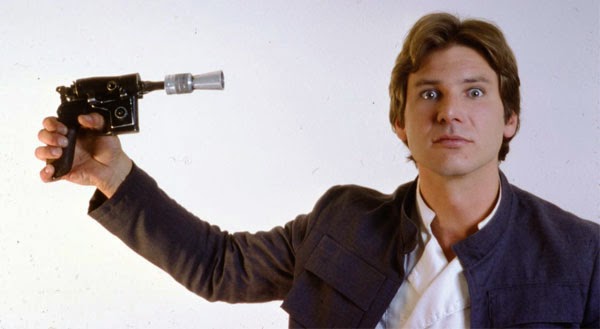
That's how I feel about it too, Harrison.

To be fair, I don't hate the idea of a unified story department.  I think that's a huge step toward establishing the enormous chronology of events that extend across movies and novels.  However, the formulation of this department also means the inevitable altering of existing EU content in order to make room for the new movies.  And if Star Wars fans know one thing about George Lucas, it's that he's not afraid to alter things...


Why this is bad


1). Many of my favorite characters are no longer real.  "Real."  You know what I mean.


My first Star Wars novel was The Bacta War by Michael A. Stackpole.  I remember the first time I picked up that paperback copy off of a Barnes and Noble shelf and saw the X-Wings and that solitary A-Wing chasing TIE Fighters and Interceptors across a backdrop of exploding Star Destroyers.  I remember the sudden feeling of absolute excitement that ran through me: the knowledge that there were Star Wars books to go along with the movies was a giddy revelation.

And so I fell in love with the heroic glamor of Rogue Squadron, led by Wedge Antilles and Tycho Celchu on countless daring missions against the Empire.  Joining their ranks was my absolute favorite character in the Star Wars universe: Corran Horn.  Horn, a former officer of Corellian Security (CorSec) and an ace pilot, the descendant of a Jedi Knight and - later - a master of the Force himself.  Sardonic, sarcastic, sometimes insubordinate, but ultimately level-headed and self-sacrificial, Corran became my favorite Star Wars persona.  I also fell in love with Rogue Squadron pilots Derek "Hobbie" Klivian and Wes Janson, characters found in the Star Wars films (albeit in name alone), who developed rich personalities via the pages of the X-Wing novels.  And then there was Aaron Allston's (RIP) Wraith Squadron - Kell Tainer, Garik "Face" Loran, Myn Donos, Voort "Piggy" saBinring, and others - a gangly collection of misfit pilots and criminals organized by Wedge as a covert intelligence squad who specialized as much in B&E and reconnaissance operations as they did in dogfights.  Then, of course, there were the Jedi: Ganner Rhysode; Kyp Durron; Cilghal; Kam Solusar; Jacen, Jaina, and Anakin Solo; Tahiri, Lowbacca; and Tenel Ka - just to name a few.  And who didn't love to hate Borsk Fey'lya, the power-hungry and short-sighted Bothan and Chief of State, who opposed Princess Leia in the senate at every turn yet ultimately sacrificed himself in such a heroic fashion when the Yuuzhan Vong invaded Coruscant?

The point is this.  The exclusion of existing EU novels from the newly established canon means that all of these characters, for whom I've developed a deep affinity, are suspended in limbo - at the mercy of the story group to somehow resurrect into the new canon.  It's like they never truly existed.

You know what I mean.

2). The only era of EU fiction that might still be regarded as canon are the pre-Episode I novels.


"Mesa here to make this painful for you!"
As a loyal Star Wars fan, I'm forced to accept the prequels for what they are.  I could write - and probably will someday - another lengthy post about my issues with them (namely, from a fanboy standpoint, the redefinition of the Force, the ridiculous messianic conception of Anakin, and the appalling relationship between Anakin and Obi-Wan; from a film standpoint, the lack of a more prominent role for Darth Maul, the abysmal casting, the far-too-heavy reliance on CGI, and - of course - the painfully forced attempts at humor).  However, conceptually, the prequels have their undeniable place in the Star Wars continuity.  As flawed as they are, they still establish the rise of the Empire and the fall of the Old Republic, as well as introduce the need for a hero to restore good and order in the galaxy.

That being said, the Old Republic/Clone Wars era claims the least amount of my sentiment.  As I said before, I grew up with the original trilogy and primarily read the post-ROTJ novels.  The Clone Wars era has always held less interest to me because I care far more about Han Solo's exploits and the war between the Rebellion and the Empire than I do about Jorus C'baoth and ancient Sith culture.  That's not to say those aspects of the chronology aren't still fascinating to me, and regardless of my personal interest, they comprise a huge part of the overall story.  However, if I had to pick one era of EU to get the axe... well, you can take a guess.

To me, it seems unfair and strategically unsound for the larger part of the EU (the post-ROTJ material) to cease to be canon while the smaller, more legendary/less historical part should remain.  But the sad reality is simply that, because there are no plans for more movies prior to Episode I, the prequel era of Star Wars EU can remain unaffected.  Unfortunately, because all post-ROTJ novels stand in the way of Episodes VII-IV, they've found themselves on the chopping block.

Granted, the umbrella statement released by the story group is that all EU content is non-canon, but the only eras which will be disturbed by the new additions to the Star Wars family are those following Return of the Jedi.  Basically, prequel EU content can take advantage of this negligence and remain intact.

3). It changes the story.


Jaina & Jacen Solo
"Wait, Jar Jar gets to stay but we don't?!"
In my head, I know how the Empire crumbled after Return of the Jedi.  I know that Luke formed a new Jedi Academy on Yavin IV, sought out Force-sensitive pupils across the galaxy, and eventually raised up a new Jedi Order.  I know that Wedge Antilles took command of Rogue Squadron, threw down Courascant and Ysanne Isard, and eventually became a distinguished General in the New Republic military.  I know how Han and Leia were married, how they took down Warlord Zsinj and had Jacen, Jaina, and Anakin - children who would all grow to become powerful Jedi and heroes of the New Republic.  I know how Mara Jade was once the Emperor's Hand but turned to the Light and married Luke.  I know that Chewbacca died valiantly to save Anakin from the Yuuzhan Vong.

And all of that is just the very tip of the EU iceberg.

Were there problems with the chronologies and moments of absurdity that you have to pretend not to remember?  Of course.  Were there misrepresentations of other authors' characters in successive books by other writers?  Certainly.  Was there a gratuitous overuse of unbeatable super-weapons akin to the Death Star, all of which seem to mysteriously appear without any previous detection and fade again into unrealistic obscurity (destroyed or otherwise)?  Unfortunately.  And were there unrealistic moments where younger, less experienced characters gave orders to older characters who severely outranked them?  Unquestionably yes (see especially: The New Jedi Order era).

I digress, but all of these problems are intrinsic to collaborative effort - and to glorified fan fiction, for that matter.  Some authors are better at detail management than others.  Some truly understand Star Wars jargon and some do not.  Some authors are, frankly, better at writing than others, and it is immediately obvious who's done the homework and who hasn't.  But the sum total of their endeavors was an ambitious, overarching plot with as many highs and lows as the films themselves.  It was a generally cohesive story that carried beloved characters beyond the undefined boundaries of the original and prequel trilogies.

This is the problem that will be the most difficult for me.  Going to see the new movies and reading the new EU novels - which I unquestionably will - is going to be an emotional roller coaster (and not the good kind), as events unfold contrary to what I know, with or without characters I love.

It's going to be difficult not to say, "That's not the way it was supposed to happen."


Why this is good


Yes, there are some good things about this transition.  Besides, I'm used to having to accept subpar aspects of the universe (see: Jar Jar Binks, R2-D2 with rocket boosters, midi-chlorians, etc).   Not unlike the Force itself, there's as much a light side as a dark side to this issue, and it wouldn't be fair to discount all the positive aspects just because of my own personal bias.

1). It establishes a much more official canon.


For the last thirty years, there has existed the "G," "T," "C," and "S" levels of Star Wars canon, together forming the overall continuity across the various media types that have taken up the story.  Each ascending level typically overrides the lower ones: "G" was George Lucas' canon (AKA the films), "T" was the television canon (Star Wars: The Clone Wars), "C" was the continuity canon (novels and videogames), and "S" was the secondary canon (anything that was published which ran alternately to the films).  There was also an "N" or non-canon level that included what-if type stories and anything else directly and irreconcilably contradicted by higher canon.  No matter which way you slice it, this was a very confusing and absolutely ridiculous system (for anyone who cares, this article can explain it a little more thoroughly), yet the nature of licensing, copyright, and creative ownership demanded it exist - until the formation of this new Lucasfilm story group, that is.

[UPDATE: see Wookieepedia's new statement on canonicity and their new policy on documenting Legends material]

The existing EU timeline, with some noticeable omissions (i.e. Young Jedi Knights and Junior Jedi Knights series)

The bottom line is that a newly established chronology trims both the excess and the confusing nomenclature in order to create one officially unified storyline across all media types, effectively removing any question as to what is really part of the story.  As an additional plus, renowned EU authors such as Timothy Zhan (one of the very first to publish EU material) will be directly involved in the collaboration of this continuity, ensuring that existing materials will be given appropriate levels of respect across the board.

2). It means a fresh start.


I have to admit that I'm curious to see what the new films and novels will entail.  The concept of new Star Wars characters almost distracts from the disappointment of losing the ones I already know and love, in addition to providing a chance for the franchise to redeem itself after the less-than-satisfactory prequel trilogy.  As the official statement released by the Lucasfilm story group attests, maximum creative freedom is being extended to the filmmakers in order to "preserve an element of surprise and discovery for the audience," which is ultimately why Episodes VII-IX "will not tell the same story told in the post-Return of the Jedi Expanded Universe."  Unquestionably, the Star Wars universe has always encompassed unexplored territories, unlikely characters, and uncommon feats of heroism in the face of evil, all of which are bound to be elements of the new series.

One of the reasons I am thankful the prequels were released is the simple fact that they created a new generation of Star Wars fans - fans who otherwise wouldn't have had the same love (if any) for the franchise.  To young fans, the original series is not as exciting or engaging as Attack of the Clones and Revenge of the Sith.  The same will be true of episodes VII-IV and the new EU novels.  A new series means a new audience won't need to start at the beginning in order to understand characters, locations, races, and technology.  They'll be drawn into the Star Wars universe where it meets them, and from there - should the interest arise - have the option to expand into the rich content which the EU has to offer.

3). Nothing is being completely discarded.


According to the Lucasfilm story group, existing EU content will not simply disappear.  Instead, it will continue to be printed under a new label: "Star Wars: Legends."  As the official statement words it:
While the universe that readers knew is changing, it is not being discarded. Creators of new Star Wars entertainment have full access to the rich content of the Expanded Universe...  Demand for past tales of the Expanded Universe will keep them in print, presented under the new Legends banner.
Additionally, there has been no indication from Lucasfilm that all existing characters and stories will be relegated to the "Legends" category, which means that future novels and games may draw upon this era for material and characters - so long as it coincides with the new films.  Personally, I'm curious to know whether authors and developers will continue to release new material under the "Legends" label, or if they'll be discouraged from doing so by the story group.  Most likely, that era of the EU has closed its proverbial final chapter.

That being said, I greatly appreciate the fact that three decades' worth of stories aren't going to be removed just to make room for the upcoming films.  If we're honest about it, a huge part of the reasoning behind that decision is due to the fact that Lucasfilm doesn't want to lose the financial support of older fans of the series (such as myself) who would be greatly upset if the decision had been made to simply throw the EU out the window.  On the other hand, the members of the story group have a great amount of respect for the existing EU, a number of them have contributed to the EU themselves, and all of them want to preserve it as carefully as possible.  No one wants to see three decades of imagination disappear.

R2-D2 and C-3P0 concept art by Ralph McQuarrie
"We seem to be made to suffer.  It's our lot in life..."
Also, if we look at this from a purely philosophical standpoint, the original concept of Star Wars was that of a legend.  It takes place not a thousand years in the future, but at an undetermined time in an unspecified location - "a long long time ago in a galaxy far, far away."  In that regard, it makes sense that there would be alternate versions of the story - much in the same way that there are so many renditions of the tales of King Arthur.  Lucas drew heavily from classical mythology when he was writing Star Wars, and for that reason it is steeped in an air of myth.  Therefore, alternate tellings, overlap in chronology, and even incongruity between stories would naturally fall into that realm.  In that vein, I think it's also important to remember that, in the original series, R2-D2 and C-3P0 were the "narrators" of the story.  Let's not forget the microcosmic way R2 carried the message from Leia and the Death Star schematics, or the way C-3P0 literally retold the Rebels' exploits to the Ewoks in Return of the Jedi.  The entire journey was supposed to be their narrative experience, although that idea that was discarded in the prequel trilogy.  However, if we return to this original idea and consider the droids the bards of the Star Wars history, we can perhaps appreciate the fact that - considering both droids' memory wipes, damage repairs, and various traumatic experiences - it only makes sense that some details would be changed, skewed, and lost (not to mention colored by 3P0's self-piteous paranoia).  Such is the case with any storytelling: it's subject to bias and perspective, but the themes and the struggle are what matter most of all.


In sum, although this announcement has been a major disappointment to me, there's not much sense in lamenting a decision that will not be reversed.  Despite the transformation it is undergoing, the EU is neither gone nor forgotten, and for that I can be thankful.  The bottom line is that the Star Wars galaxy is a big place.  There's room for countless characters, each with rich histories and adventures, and perhaps even an alternate version of the chronology.  Though the new films and future novels will be inconsistent with the EU stories I know and love, I'll still find a way to make them all fit together on my bookshelves.

It's all Star Wars.

My interpretation of that universe is big enough to include it all.